Center of Mass, Momentum & Collision

JEE Main level, single correct, medium

123 of 130

Question 123 of 130

A particle of mass m\text{m} moving in the xx direction with speed 2v2v is hit by another particle of mass 2m2m moving in the yy direction with speed v.v. If the collision is perfectly inelastic, the percentage loss in the energy during the collision is close to:

Show answer and solution

Answer: (D) 5656%

The initial momentum of system is Pi⃗=m(2V)i^+(2m)Vj^\vec{{P}_{i}}=m\left(2V\right)\hat{i}+\left(2m\right)V\hat{j}

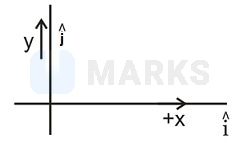
According to question as


On perfectly inelastic collision the particles stick to each other.


Pf⃗=3mVf⃗\vec{{P}_{f}}=3m\vec{{V}_{f}}

By conservation of linear momentum


Pf⃗=Pi⃗⇒3mVf⃗=m2Vi^+2mVj^\vec{{P}_{f}}=\vec{{P}_{i}}\Rightarrow 3m\vec{{V}_{f}}=m2V\hat{i}+2mV\hat{j}

⇒Vf⃗=2V3(i^+j^)⇒∣Vf∣=223V\Rightarrow \vec{{V}_{f}}=\dfrac{2V}{3}\left(\hat{i}+\hat{j}\right)\Rightarrow |{V}_{f}|=\dfrac{2\sqrt{2}}{3}V

∴∴ loss in KE. of system =Kinitial−Kfinal={K}_{initial}-{K}_{final}

=12m(2V)2+12(2m)V2−12(3m)(22V⁡3)2=\dfrac{1}{2}m{\left(2V\right)}^{2}+\dfrac{1}{2}\left(2m\right){V}^{2}-\dfrac{1}{2}\left(3m\right){\left(\dfrac{2\sqrt{2}V⁡}{3}\right)}^{2}

=2mV2+mV2−43mV2=3mV2−4mV23=53mV2=2m{V}^{2}+m{V}^{2}-\dfrac{4}{3}m{V}^{2}=3m{V}^{2}-\dfrac{4m{V}^{2}}{3}=\dfrac{5}{3}m{V}^{2}

% Loss in KE
=100×∆KKi=53mv23mV2=59×100=56=100\times \dfrac{∆K}{{K}_{i}}=\dfrac{\dfrac{5}{3}m{v}^{2}}{3m{V}^{2}}=\dfrac{5}{9}\times 100=56%

Full year-wise papers: JEE Main question papers (PDF)

Explain it as a whiteboard videoStep-by-step, in Hinglish or English. The written solution is free, and so is your first video.Solved it on paper but got it wrong?Upload a photo of your working. Mistake Doctor marks the exact line that broke.
Learn Collisions in depthA teacher-style lesson with diagrams, derivations and exam questions.Take a test on CollisionsTimed questions, then a report on what to revise.

Learn the concept

System of Particles and Rotational Motion — Centre of mass and torqueClass 11 Physics lesson with diagrams, worked examples and a quick check.
Revise Rotational Motion firstFormula sheet, solved examples and the traps students fall into.

More questions on Collisions